
UEFA Nations League 2025–26: Full Fixtures, Groups & Schedule
The UEFA Nations League 2025–26 is set to bring another intense chapter to European international football. Since its introduction, the Nations League has transformed the way national teams compete during international breaks, replacing low-intensity friendlies with meaningful, competitive matches. As fans across Europe prepare for the upcoming edition, interest is already high around the fixtures, groups, match schedule, promotion and relegation battles, and qualification implications.
In this complete guide, we break down everything you need to know about the UEFA Nations League 2025–26, including how the tournament works, league and group structure, key dates, fixture format, and why this competition matters more than ever.
What Is the UEFA Nations League?
The UEFA Nations League is a biennial international football competition organized by UEFA and contested by European men’s national teams. It was created to:
- Reduce meaningless international friendlies
- Increase competitive balance
- Give smaller nations realistic goals
- Offer additional qualification routes for major tournaments
Instead of random friendly matches, teams are placed into leagues and groups based on their UEFA coefficient rankings. Every match now has stakes — whether it’s promotion, relegation, or qualification opportunities.
UEFA Nations League 2025–26 Overview
- Competition: UEFA Nations League
- Season: 2025–26
- Participating teams: All UEFA national teams
- Format: League phase + promotion/relegation + play-offs
- Match type: Home & away group matches
The 2025–26 edition continues the refined structure introduced in recent seasons, ensuring competitive balance and high-quality fixtures across all levels.
Nations League 2025–26 Format Explained
The tournament is divided into four leagues based on team strength:
A League
- Europe’s elite national teams
- Compete for the Nations League title
- Includes quarter-finals, semi-finals, and final stages
B League
- Strong mid-tier nations
- Promotion to League A at stake
C League
- Developing national teams
- Promotion and relegation battles are highly competitive
D League
- Lowest-ranked UEFA nations
- Focused on development and progression
Each league is divided into groups of four teams (some variations may apply depending on UEFA’s final allocation).
Groups in UEFA Nations League 2025–26
UEFA officially confirms the group allocations following the draw ceremony. Teams are distributed into pots based on rankings, ensuring balance and fairness.
Each group follows this structure:
- 4 teams per group
- Round-robin format
- Home and away matches
- 6 matches per team in the group stage
Group winners and bottom teams face different outcomes depending on their league.
Promotion and Relegation Rules
One of the most exciting aspects of the Nations League is promotion and relegation.
Promotion
- Group winners in Leagues B, C, and D are promoted to the next higher league
Relegation
- Bottom teams in Leagues A, B, and C are relegated
Play-offs
- Some leagues include promotion/relegation play-offs to finalize league placements
This system ensures that every match matters until the final whistle of the last matchday.
UEFA Nations League 2025–26 Fixtures Structure
Rather than listing all matches in one long block, UEFA organizes fixtures by international windows.
Typical Match Windows
- September 2025
- October 2025
- November 2025
- March 2026 (play-offs and finals)
Each window usually includes two matchdays, allowing teams to play home-and-away fixtures efficiently.
Example Fixture Schedule Format
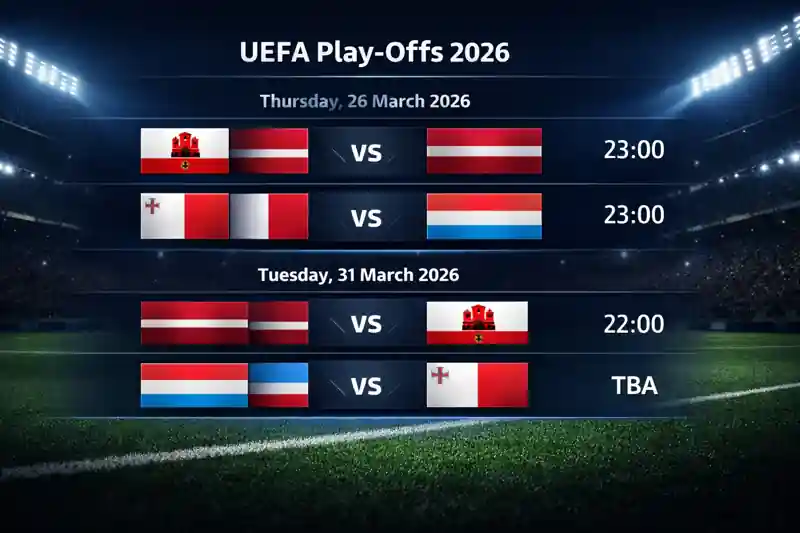
While exact match pairings depend on the draw, fixtures generally follow this format:
| Date | Matchday | Fixture Type |
|---|---|---|
| September 2025 | Matchday 1–2 | Group stage |
| October 2025 | Matchday 3–4 | Group stage |
| November 2025 | Matchday 5–6 | Group stage |
| March 2026 | Play-offs / Finals | Knockout stage |
This structure allows players adequate rest while maintaining competitive rhythm.
Nations League Finals & Knockout Phase
League A Finals
The top teams from League A advance to a knockout stage:
- Quarter-finals
- Semi-finals
- Third-place match
- Final
The finals determine the UEFA Nations League 2025–26 champion.
Promotion/Relegation Play-offs
Teams placed second or third in certain leagues may enter play-offs to decide final league placements for the next edition.
Why the UEFA Nations League Matters
The Nations League is not just another trophy — it has real competitive value.
Competitive Matches
- No “friendly” mentality
- Strong lineups even in smaller nations
Tournament Qualification Impact
- Can influence qualification pathways for the European Championship and World Cup
- Offers backup qualification routes for teams that struggle in traditional qualifiers
Development Opportunities
- Smaller nations gain regular high-pressure match experience
- Improved tactical and squad development
Key Teams to Watch in 2025–26
While group draws determine exact matchups, several teams are expected to draw major attention:
- Traditional powerhouses from League A
- Emerging teams pushing for promotion
- Underdogs fighting to avoid relegation
The beauty of the Nations League lies in its unpredictability — surprises happen every season.
Where to Watch UEFA Nations League 2025–26
Broadcast rights vary by country, but typically include:
- National public broadcasters
- Major sports TV networks
- Official digital streaming platforms
Many countries also offer free-to-air matches, making the competition widely accessible.
Live Scores & Match Updates
Fans can follow:
- Live scores
- Match statistics
- Lineups and substitutions
- Group standings in real time
This real-time accessibility has significantly boosted the Nations League’s popularity.
Tactical Importance for National Teams
Managers now treat Nations League matches as:
- Competitive tests for new players
- Tactical experiments under real pressure
- Preparation for major tournaments
As a result, the football quality has steadily improved with each edition.
Impact on Players & Clubs
While some clubs initially expressed concerns about fixture congestion, UEFA has refined scheduling to balance:
- Player workload
- Travel demands
- Recovery time
For players, the Nations League offers a chance to:
- Earn international caps
- Secure starting roles
- Impress ahead of major tournaments
Fan Interest & Growing Popularity
Since its launch, the Nations League has seen:
- Higher TV viewership
- Packed stadiums for big fixtures
- Increased engagement on digital platforms
By 2025–26, the competition is firmly established as a major part of the international football calendar.
What Makes the 2025–26 Edition Special?
- Increased tactical maturity of teams
- Higher competition stakes
- Clearer qualification links
- Stronger fan recognition
Every edition builds on the previous one, and expectations for 2025–26 are high.
Final Thoughts
The UEFA Nations League 2025–26 is far more than a secondary tournament. With a clear structure, meaningful fixtures, promotion and relegation drama, and high-quality international football, it has become essential viewing for fans across Europe.
Whether you follow elite nations in League A or rising teams in the lower leagues, the Nations League offers excitement, unpredictability, and real competitive value. As fixtures roll out and groups take shape, one thing is guaranteed — European international football will be anything but boring.