
Introduction
The 2026 Winter Olympics Women’s Snowboarding Halfpipe event is set to be one of the most electrifying competitions of the Games. Snowboarding halfpipe has consistently delivered gravity-defying tricks, technical progression, and intense rivalries — and 2026 is expected to raise the bar yet again.
With the Games taking place in 2026 Winter Olympics across northern Italy, the women’s halfpipe competition will unfold on a world-class Olympic stage. As elite riders push the limits of amplitude, spin combinations, and trick difficulty, fans worldwide are anticipating a historic showdown.
This in-depth guide covers everything you need to know — from venue details and format to top contenders, judging criteria, and medal predictions.
Host City & Venue
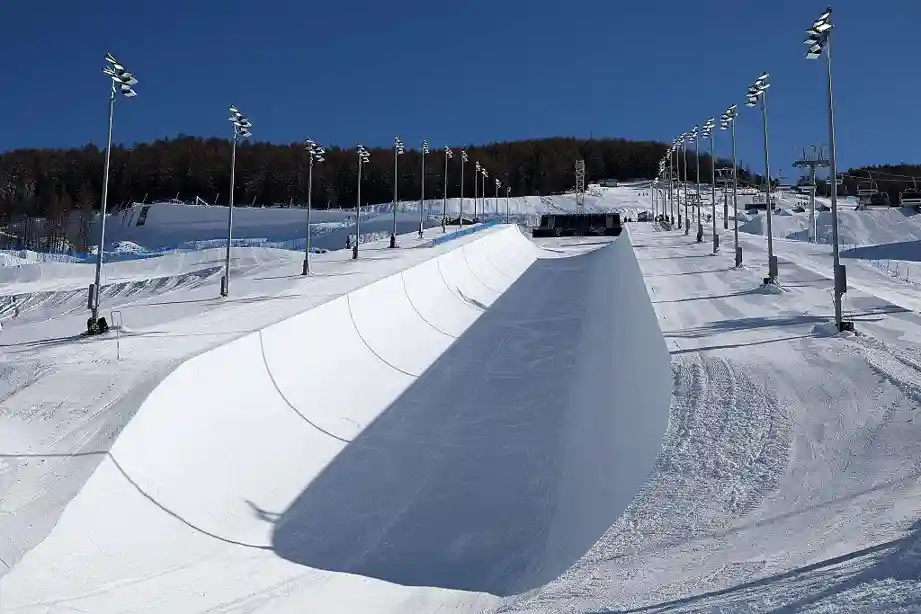
The women’s snowboarding halfpipe event will take place in Livigno, Italy, at the renowned Mottolino Snowpark.
- Location: Livigno, Lombardy, Italy
- Altitude: Approximately 1,800 meters above sea level
- Snow Conditions: Consistent alpine winter snow
- Halfpipe Specs: Olympic-standard 22-foot superpipe
Livigno is globally respected within the snowboarding community. The venue’s altitude and cold temperatures help maintain firm, fast snow — ideal for high-amplitude tricks and technical landings.
The Olympic halfpipe will be custom-built to meet International Ski and Snowboard Federation (FIS) specifications, ensuring fairness and consistency for all competitors.
Competition Format
Women’s snowboarding halfpipe follows a structured Olympic format:
Qualification Round
- All registered riders compete.
- Each athlete gets two runs.
- Best single score counts.
- Top athletes advance to finals (usually 12).
Final Round
- Finalists receive three runs.
- Highest single score wins.
- Scores reset from qualification.
This “best run counts” system encourages riders to attempt their most difficult tricks without worrying about cumulative scoring.
Judging Criteria Explained
Judges evaluate runs based on multiple technical components:
Amplitude
Height above the lip of the pipe. Higher amplitude increases scoring potential.
Difficulty
Includes:
- Double corks
- Switch tricks
- 900s, 1080s, and 1260s
- Technical grab variations
Execution
- Clean takeoffs
- Stable landings
- Controlled grabs
- No hand drags
Variety
Judges reward diverse trick selection and avoidance of repetition.
Flow & Progression
Seamless transitions and pushing the sport forward earn higher marks.
Scores range up to 100, with medal-winning runs typically scoring in the high 80s to mid-90s.
Top Contenders to Watch
Chloe Kim (USA)
Chloe Kim is widely regarded as the greatest women’s halfpipe snowboarder of all time.
- Olympic Gold – 2018, 2022
- Known for consistent 1080s and amplitude dominance
- Unmatched competition composure
If she competes in 2026, she could become the first woman to win three Olympic halfpipe gold medals.
Queralt Castellet (Spain)
Queralt Castellet brings experience and technical precision.
- Olympic Silver Medalist
- Strong switch riding
- Creative trick combinations
Her consistency makes her a serious podium threat.
Sena Tomita (Japan)
Sena Tomita represents Japan’s technical excellence.
- Olympic Bronze Medalist
- Strong double cork repertoire
- Clean, stylish execution
Japan’s halfpipe program continues to develop elite talent.
Emerging Riders
The 2026 Games may also introduce new stars from:
- China
- Canada
- Australia
- Switzerland
Youth athletes are already landing high-rotation tricks once considered impossible in women’s competition.
Evolution of Women’s Halfpipe
Over the past decade, women’s halfpipe has seen exponential progression:
| Year | Technical Milestone |
|---|---|
| 2014 | First consistent 900s |
| 2018 | Double corks normalized |
| 2022 | Back-to-back 1080 combinations |
| 2026 | Potential 1260 breakthroughs |
The gap between men’s and women’s trick difficulty has narrowed significantly. Riders are now combining amplitude, double corks, and technical grabs within a single run.
Global Impact
The 2026 Winter Olympics could reshape women’s snowboarding:
- Increased sponsorship opportunities
- Expanded youth participation
- More investment in training facilities
- Greater media exposure
Italy’s Alpine backdrop will provide cinematic visuals, elevating the sport’s global appeal.
Medal Predictions (Early Outlook)
While Olympic results are unpredictable, early analysis suggests:
Gold – Likely favorite if landing full difficulty run
Silver – Consistency specialist
Bronze – Emerging rider with high-risk tricks
Execution under pressure remains the decisive factor.
Why 2026 Could Be Historic
Several elements make this competition unique:
- Possible triple Olympic gold attempt
- Next-generation trick progression
- High-altitude performance conditions
- European host advantage
Expect higher scores, more technical rotations, and potentially record-breaking performances.
How to Watch
The women’s halfpipe competition will be broadcast globally through official Olympic partners. Check:
- Official Olympic website
- National broadcasters
- Streaming platforms carrying Winter Games coverage
Time zone differences should be considered for international viewers.
FAQ Section
Q1: Where is the 2026 Winter Olympics women’s halfpipe held?
In Livigno, Italy, at the Mottolino Snowpark.
Q2: How many runs do athletes get?
Two in qualification, three in finals.
Q3: What is the pipe height?
Approximately 22 feet (Olympic standard).
Q4: Who is the favorite?
If competing, Chloe Kim remains a strong favorite.
Q5: What score usually wins?
Typically high 80s to mid-90s.
SEO Keywords
- 2026 Winter Olympics women’s snowboarding halfpipe
- Livigno Olympic halfpipe
- Women’s Olympic snowboard final 2026
- Chloe Kim 2026 Olympics
- Snowboarding halfpipe judging criteria
- Milan Cortina 2026 snowboarding
Final Thoughts
The 2026 Winter Olympics Women’s Snowboarding Halfpipe promises innovation, intensity, and history in the making. With elite athletes refining double cork combinations and pushing rotational limits, the competition could redefine what’s possible in women’s snowboarding.
From Livigno’s pristine Alpine setting to the global Olympic spotlight, this event will captivate fans and inspire the next generation of riders.
If momentum continues, 2026 may be remembered as the year women’s halfpipe reached an entirely new dimension.