

The UEFA Champions League never fails to deliver world-class football, dramatic moments, and heavyweight clashes. Among all the fixtures in the 2025–26 league phase, Real Madrid vs Manchester City, played on 10 December 2025, stood out as the most highly anticipated matchup. With two modern football giants meeting under the lights of the Santiago Bernabéu, fans around the world witnessed another chapter in this growing European rivalry.
Both teams entered Matchday 6 with huge expectations, tactical pressure, and the hunger to finish the league phase strongly. This wasn’t just another game—it was a battle for dominance, prestige, and momentum heading into the knockout rounds.
A Rivalry That Defines Modern Football
Over the past decade, Real Madrid and Manchester City have built one of the most exciting rivalries in European football. From dramatic comebacks to tactical masterclasses, their Champions League meetings have produced iconic moments.
- Real Madrid, the kings of Europe with a record number of UCL titles.
- Manchester City, the ultra-dominant Premier League machine under Pep Guardiola.
Whenever these two meet, the world stops to watch.
Match Context: What Was at Stake?
This Matchday 6 fixture wasn’t just about points—it was about positioning for the knockout rounds.
- Real Madrid needed a strong finish to secure a top spot in the league phase.
- Manchester City aimed to assert dominance and continue their journey as one of Europe’s most consistent sides.
Both teams understood that a win here would mean a psychological advantage going forward.
Venue: Santiago Bernabéu – Where Football History Lives
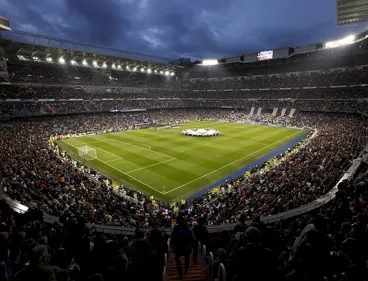
The newly renovated Bernabéu has become one of world football’s most stunning stadiums. Under the retractable roof and LED-lit exterior, the environment on matchday was electric.
More than 80,000 fans filled the stands, Madridistas waving white scarves, while a strong group of City supporters made their presence felt.
The atmosphere added pressure, intensity, and drama to the already monumental fixture.
Team Analysis: How the Giants Matched Up
Real Madrid – Experience, Flair & Tactical Balance
Carlo Ancelotti’s Real Madrid came into the match with a blend of young talent and veteran experience. Players like Jude Bellingham, Vinícius Júnior, and Rodrygo were the creative forces, while Toni Kroos and Eduardo Camavinga controlled the midfield tempo.
Madrid’s game plan:
- Quick counter-attacks
- High pressing in specific phases
- Utilizing wing play
- Exploiting City’s defensive gaps
Manchester City – Guardiola’s Tactical Precision
Pep Guardiola’s City remained one of the most tactically complex teams in Europe. The structure focused on:
- Patient build-up
- Overloading midfield spaces
- Keeping possession
- Creating openings for Erling Haaland
Players like Kevin De Bruyne, Bernardo Silva, Phil Foden, and Rodri orchestrated the system efficiently.
Key Players to Watch
Real Madrid:
- Jude Bellingham – Madrid’s midfield powerhouse
- Vinícius Júnior – Pace, dribbling, and counter-attacks
- Rodrygo – Clinical finishing
- Antonio Rüdiger – Defensive leader
Manchester City:
- Erling Haaland – The goal machine
- Kevin De Bruyne – Creativity unmatched
- Rodri – The midfield heartbeat
- Phil Foden – Technical excellence
These players were expected to define the rhythm and tone of the match.
First Half: Tactical Chess Match
The first 45 minutes were all about strategy.
City dominated possession early on, attempting to break down Madrid’s compact defensive structure. Real Madrid, meanwhile, stayed disciplined and looked for opportunities to launch quick counter-attacks through Vinícius and Bellingham.
There were moments when City’s midfield triangles looked impossible to break, but Madrid’s backline maintained composure and denied clear scoring chances.
Emotion, intensity, and anticipation built with every minute.
Second Half: Momentum Swings & High Pressure
The match opened up significantly in the second half.
- Real Madrid pushed the tempo higher
- City responded with aggressive pressing
- Both teams created more dangerous opportunities
The Bernabéu crowd got louder as Madrid’s attacks became sharper, while City showed why they are one of the top teams in Europe with their clinical transitions.
The final stages of the match featured end-to-end football, reflecting the true beauty of the Champions League.
Tactical Breakdown: How Both Teams Adapted
Real Madrid Adjustments:
- Shifted the midfield shape to limit De Bruyne’s space
- Used long balls to target Vinícius against City’s high line
- Compact pressing triggers in the defensive third
Manchester City Adjustments:
- Rotated De Bruyne & Foden between half-spaces
- Increased possession in Madrid’s half
- Brought fullbacks inward to stabilize the midfield
This was not just a match—this was elite-level tactical chess.
Why This Match Was So Special
- Two of the best teams in the world
- Legendary managers
- Star players in peak form
- A historic stadium
- Knockout-round implications
Fans got exactly what they expected: high-intensity football, drama, and world-class moments.
What This Means for the Champions League
This fixture helped shape the league phase standings and gave a clearer picture of potential knockout round matchups. For both Real Madrid and Manchester City, the result was more than just a number—it was a statement.
Teams know that meeting either of these giants in the next round will be a challenge.
Final Thoughts
Real Madrid vs Manchester City on 10 December 2025 was a true Champions League spectacle. From tactical brilliance to superstar performances, it had everything fans could ask for. Matches like this remind us why the UCL is the greatest club competition in the world.
If this is a preview of what’s coming in the knockout rounds, football fans are in for a thrilling tournament.